
Mindmap CT

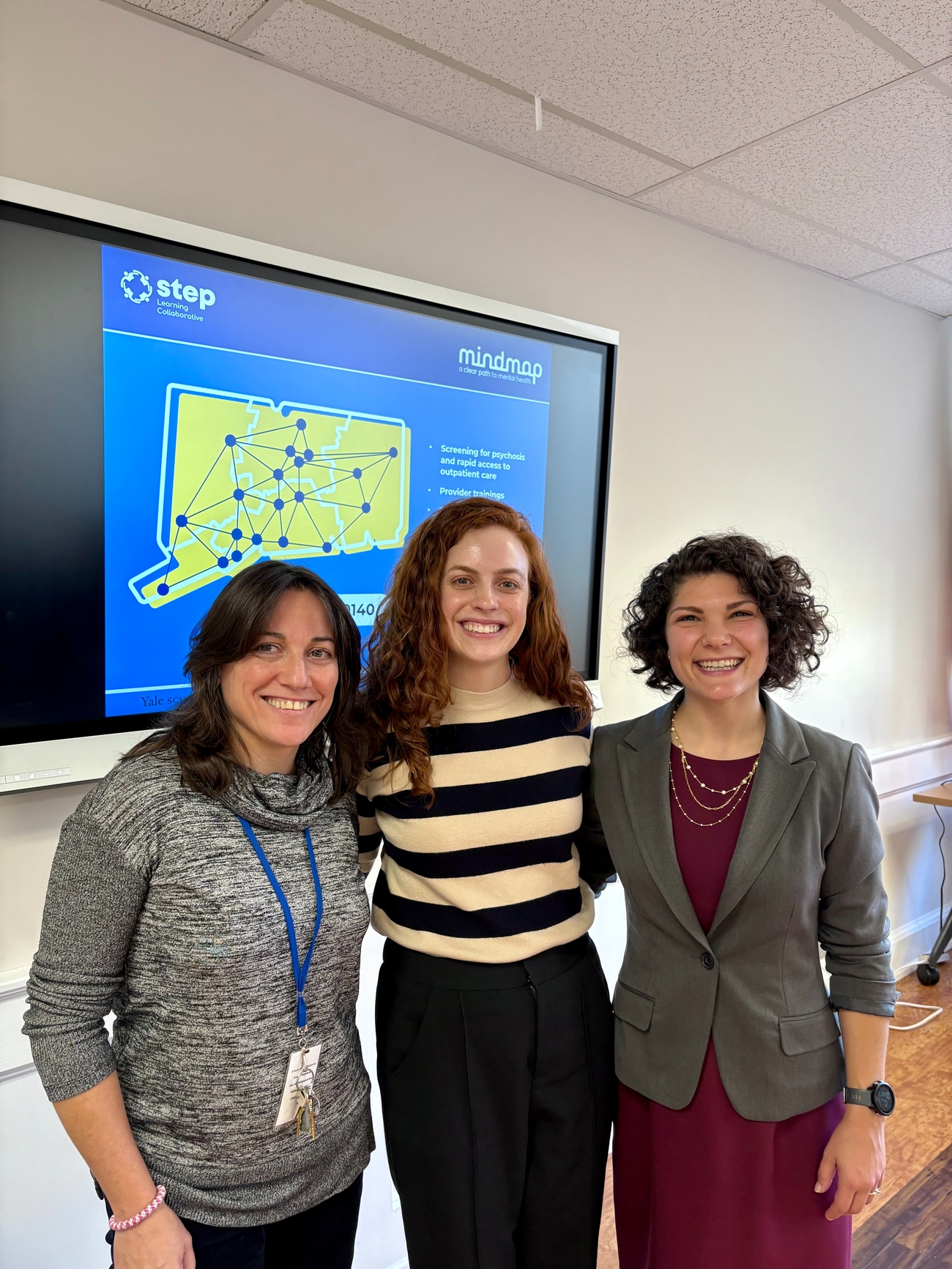
Mindmap is a psychosis awareness campaign hosted by the STEP Learning Collaborative at Yale University, focused on increasing early recognition and access to care across Connecticut. Launched alongside a research study, the campaign examined how strategic marketing and a more open, holistic model of care could help individuals enter treatment sooner. Originally piloted in New Haven, its success led to statewide funding to expand the campaign (I worked on both phases of the project).
WEBSITE, BRANDED MATERIALS, CAMPAIGN DEVELOPMENT
The Direction
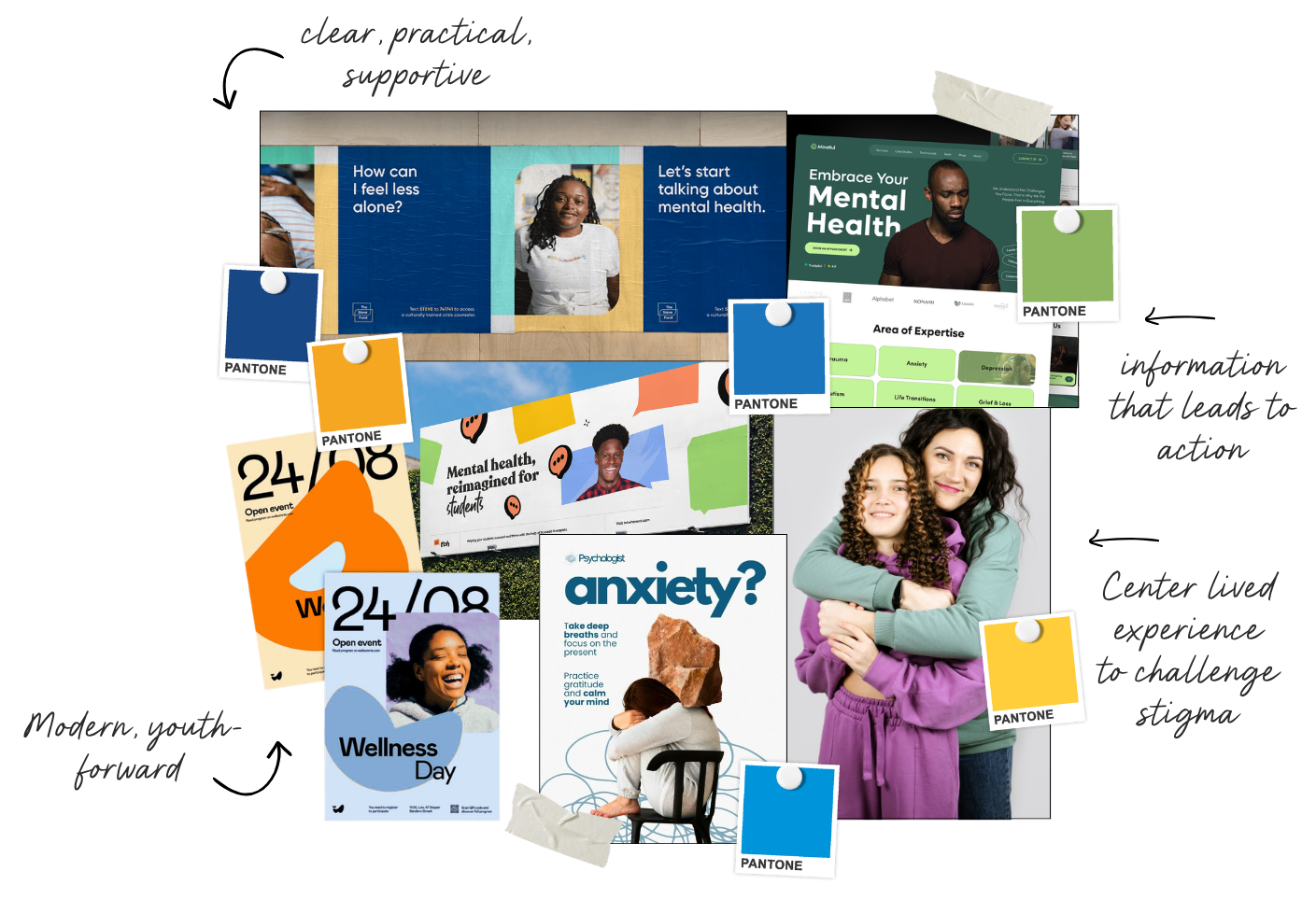
The Mindmap brand was designed to remove stigma around psychosis and move away from the traditional “white coat” feel of healthcare. The direction emphasized helping people feel less intimidated and more comfortable seeking care from the STEP team. With family often playing a key role in seeking treatment, the brand was created to resonate with parents while remaining relevant and supportive for individuals themselves.
I first worked with Mindmap to carry the established brand through the campaign's 4 years in the New Haven area. Its success secured statewide funding. By then, I was Creative Director and made the call to give the brand a visual upgrade for its next phase.
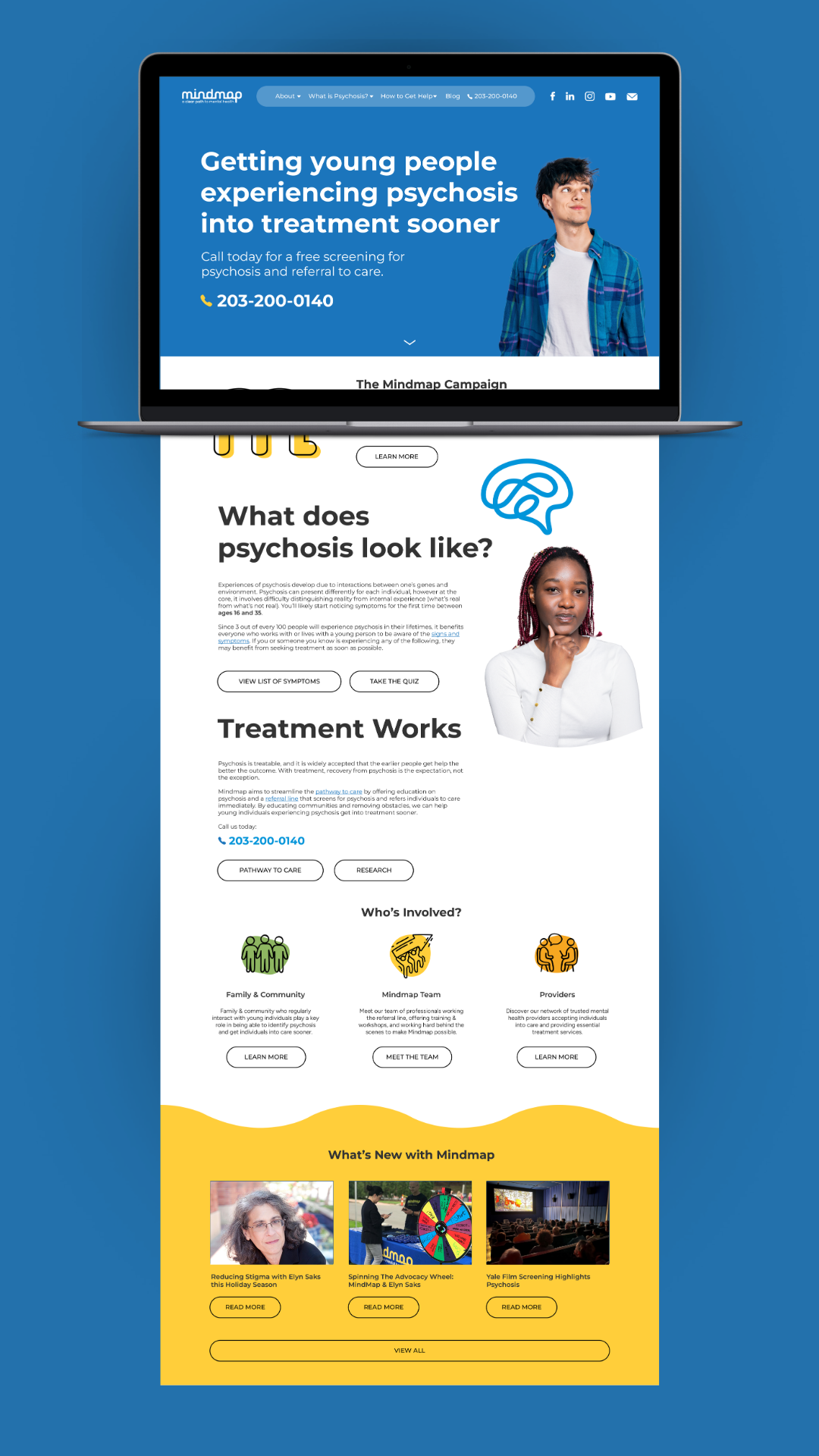
I started with the website. 10+ pages including a digital toolkit, symptom-check quiz, and lived experiences page. The goal: getting people to pick up the phone and make a referral.
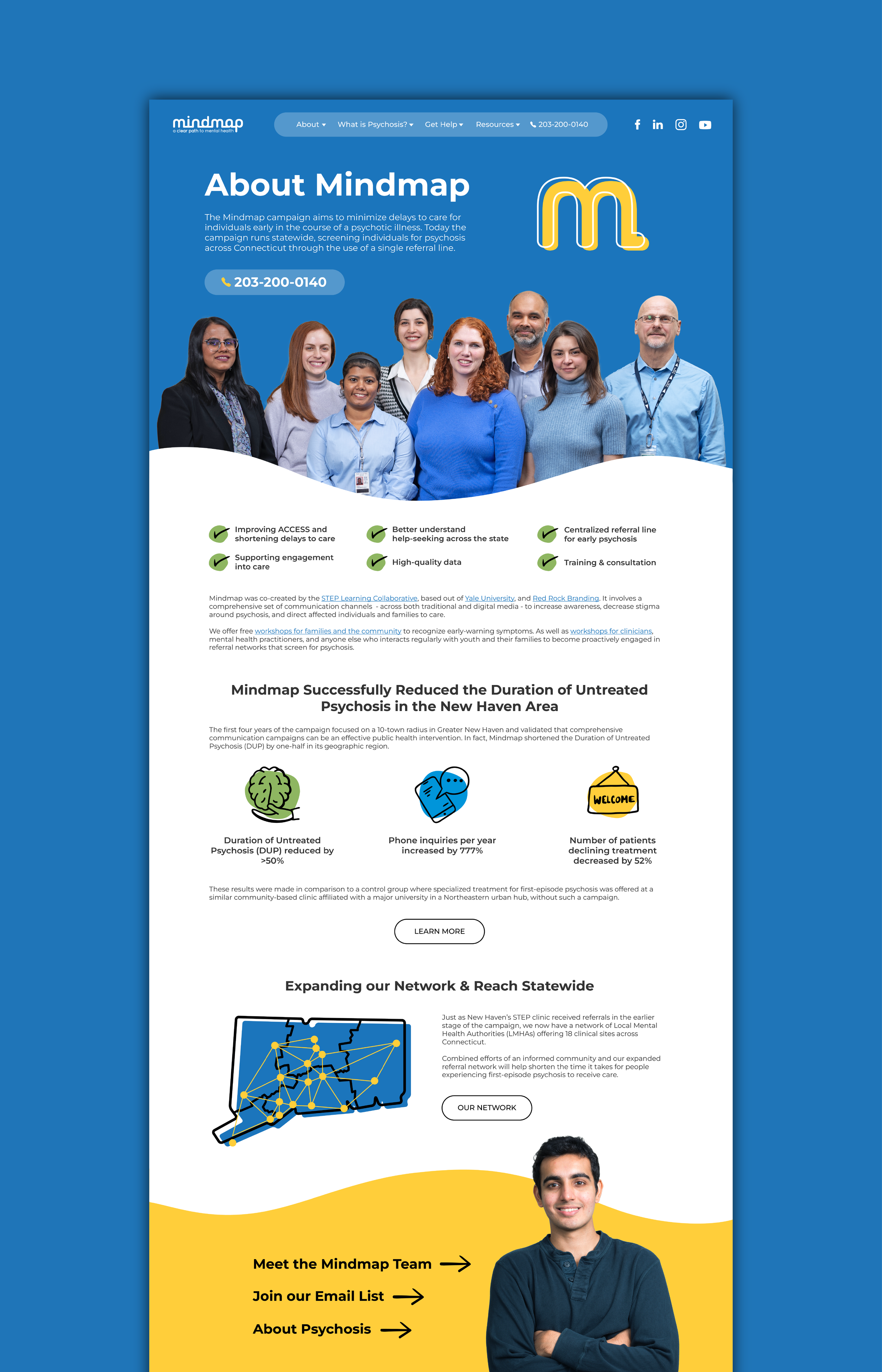
The about page told the story of what four years in Greater New Haven had proven and what it meant to be taking that work across the state.
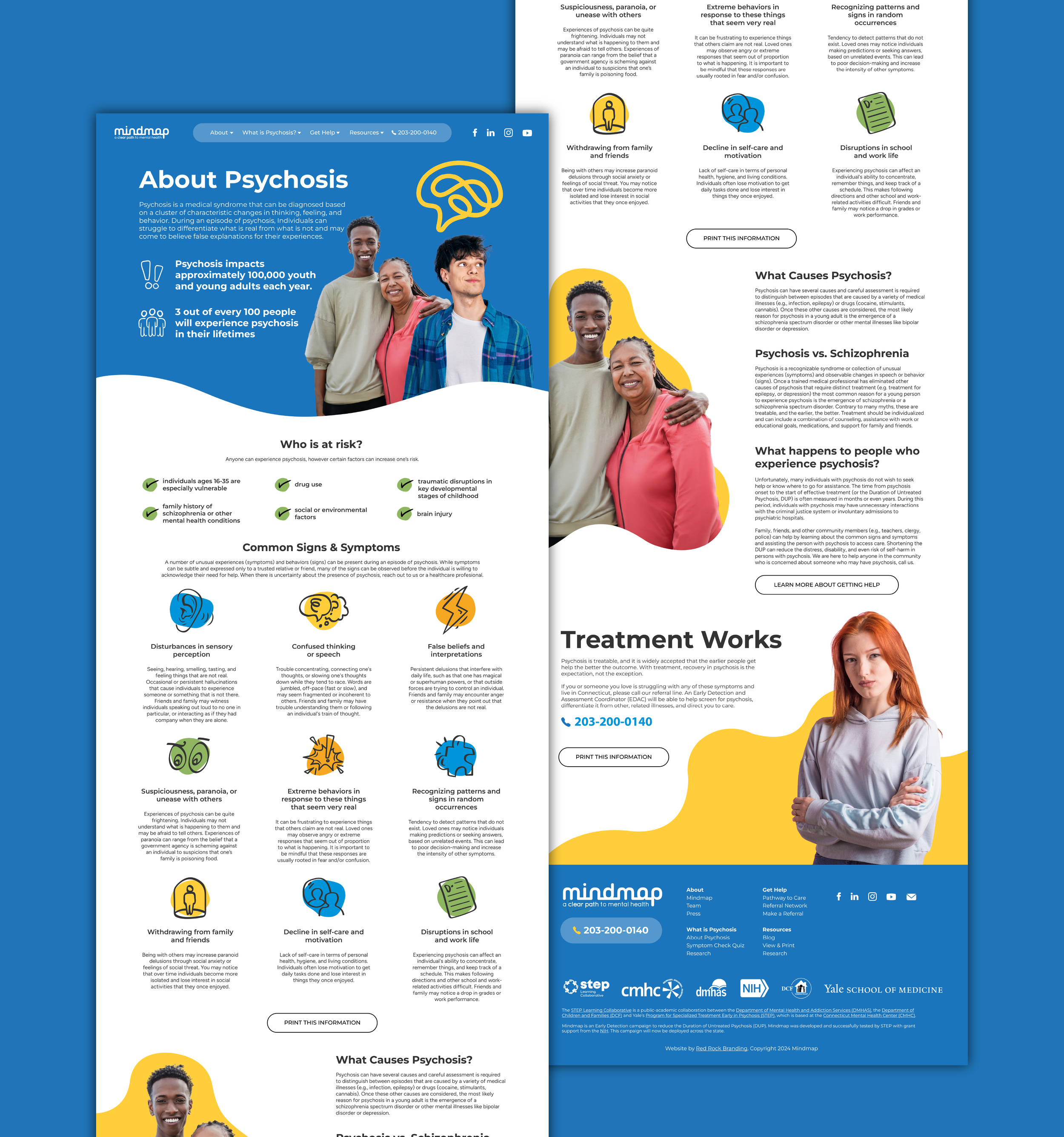
The about psychosis page broke down the risk factors, signs, and symptoms in plain language, with real-life examples that pushed back against how psychosis is typically portrayed in media. From there, visitors could take the symptom-check quiz to figure out if reaching out was the right next step.
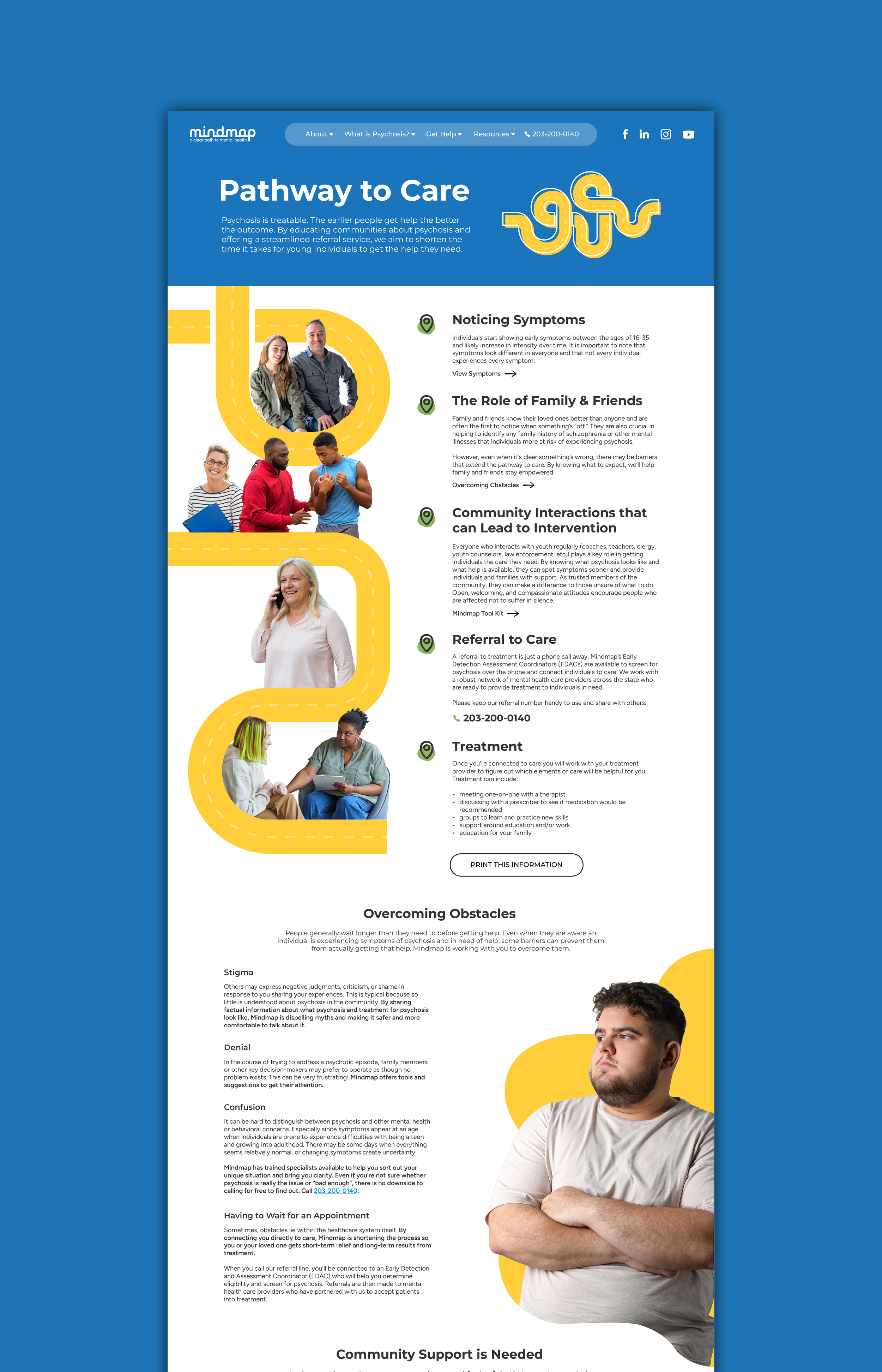
This page laid out the pathways to care, which often starts with a family member or someone else in their corner rather than the individual themselves. It also addresses the obstacles that keep many people from getting help.
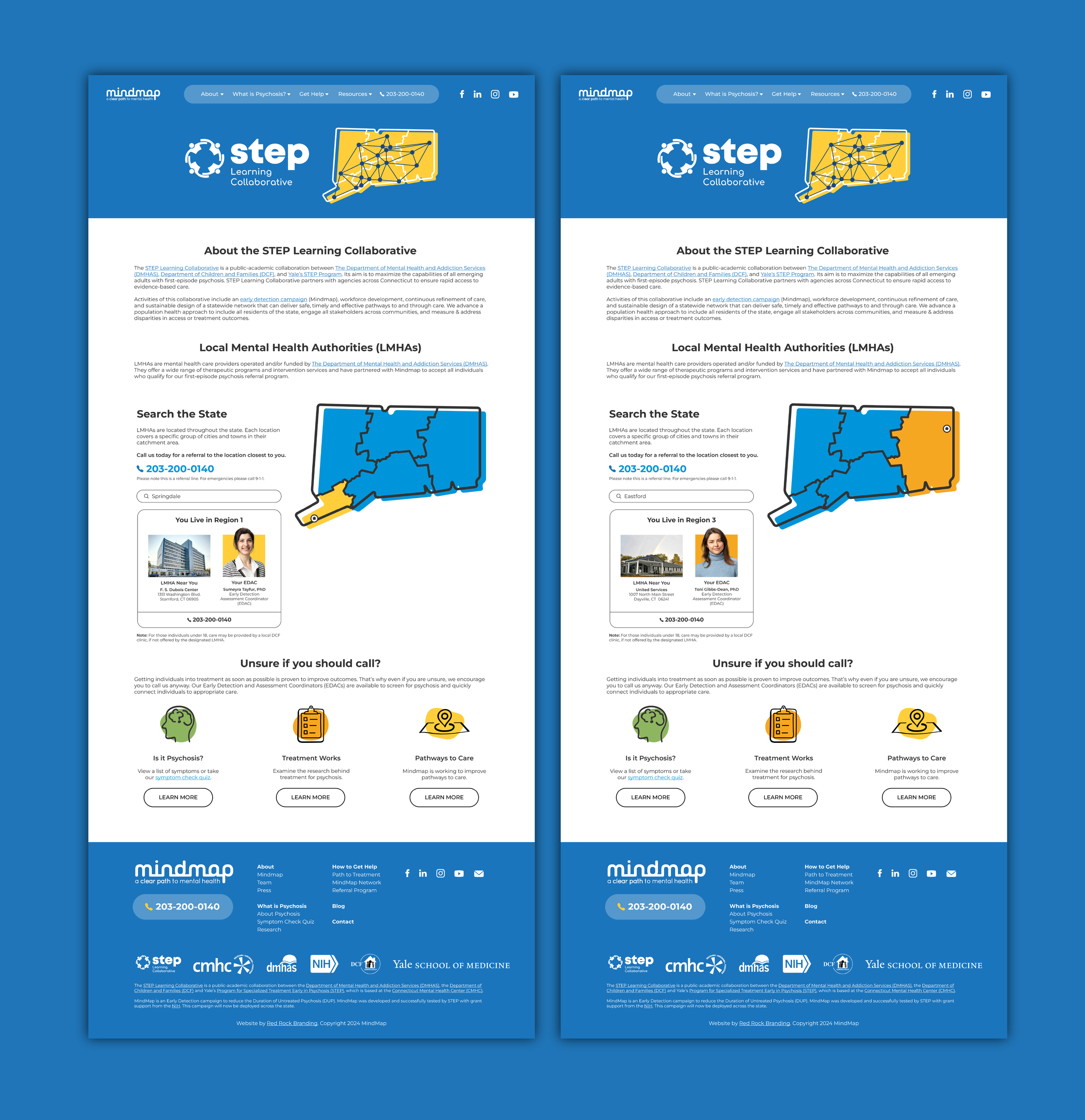
The Mindmap Network page let people search the state to find the Early Detection & Assessment Coordinator assigned to their region and the closest Local Mental Health Authority in the network. Putting a name and a face to who would be on the other end of that call was intentional.
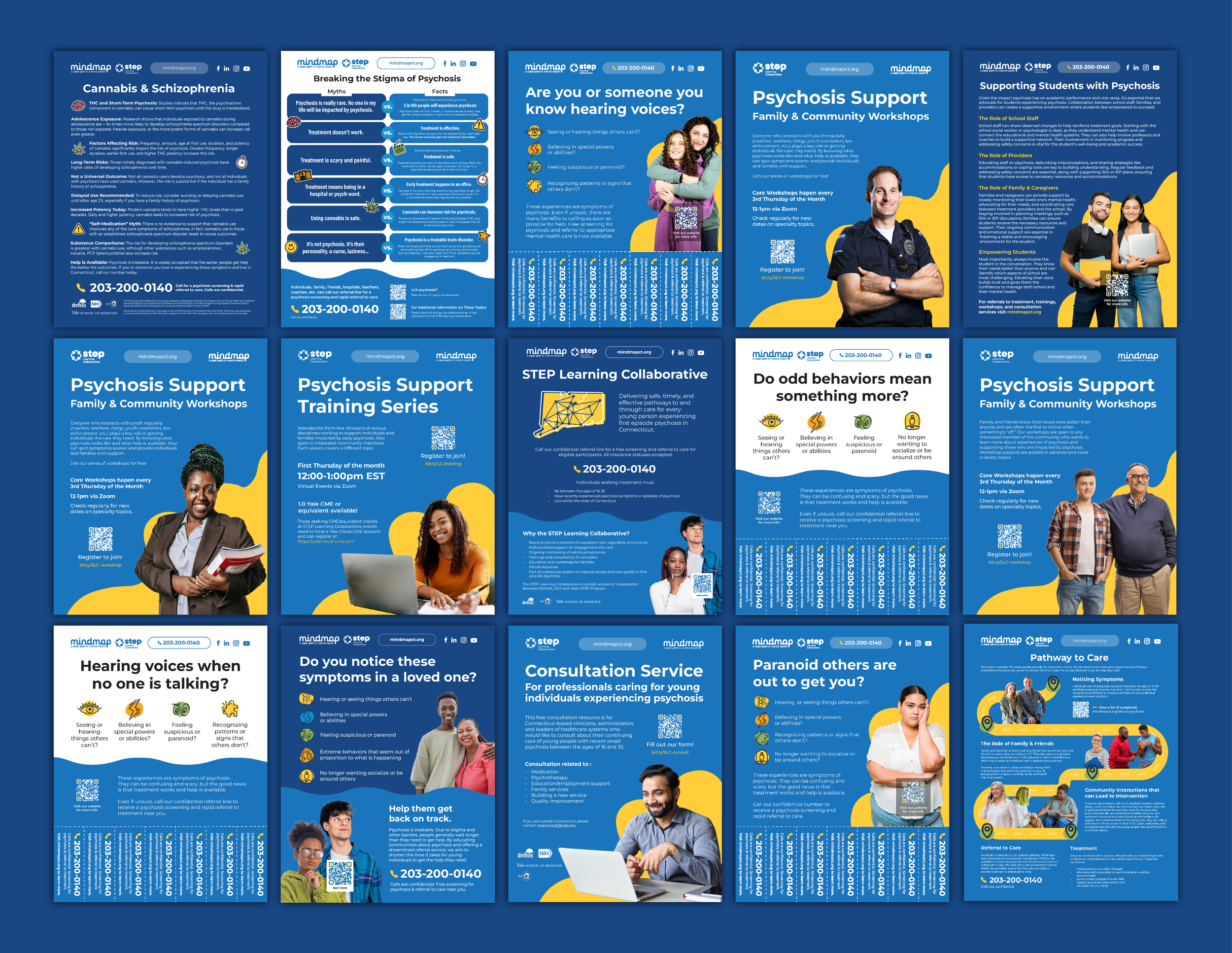
Over the course of the campaign we produced countless flyers and handouts, distributed at events, posted across college campuses and hospitals, and included in the digital toolkit for anyone to download and use themselves.
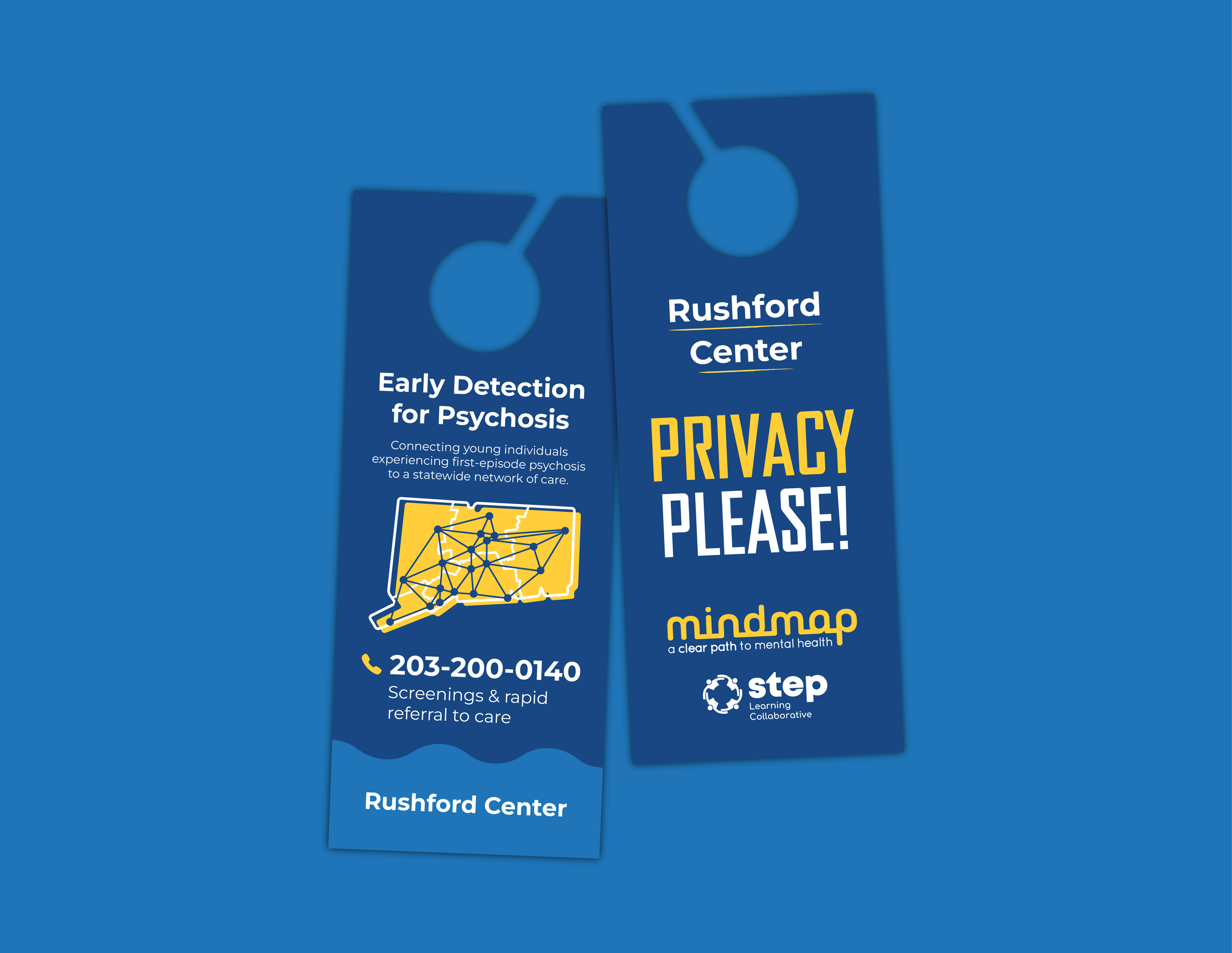
These door hangers went to the Local Mental Health Authorities providing care across the state. Having the Mindmap brand visible inside treatment spaces was intentional, so that by the time someone walked through the door, the place already felt familiar.
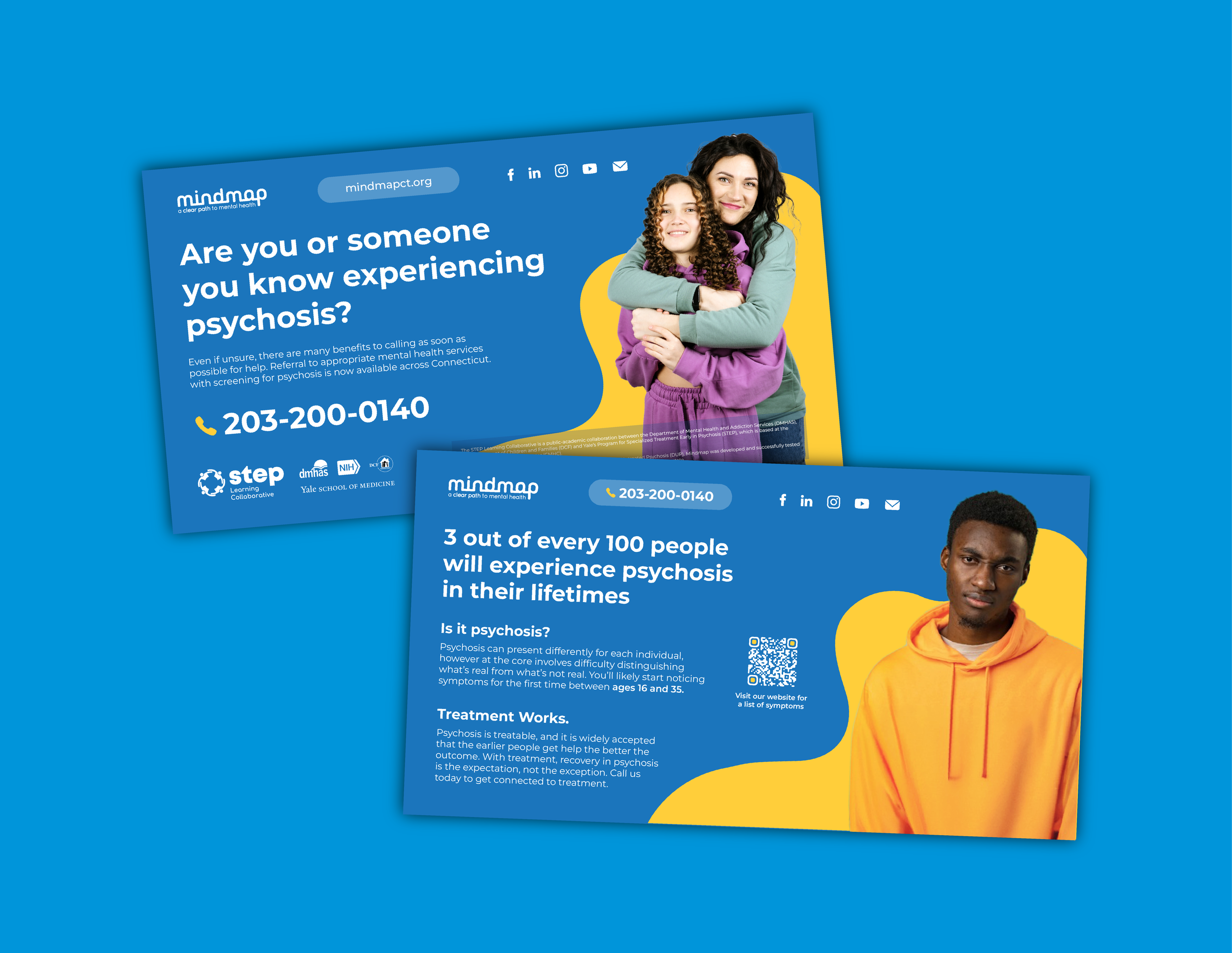
Postcards went out to areas where the campaign needed more reach.
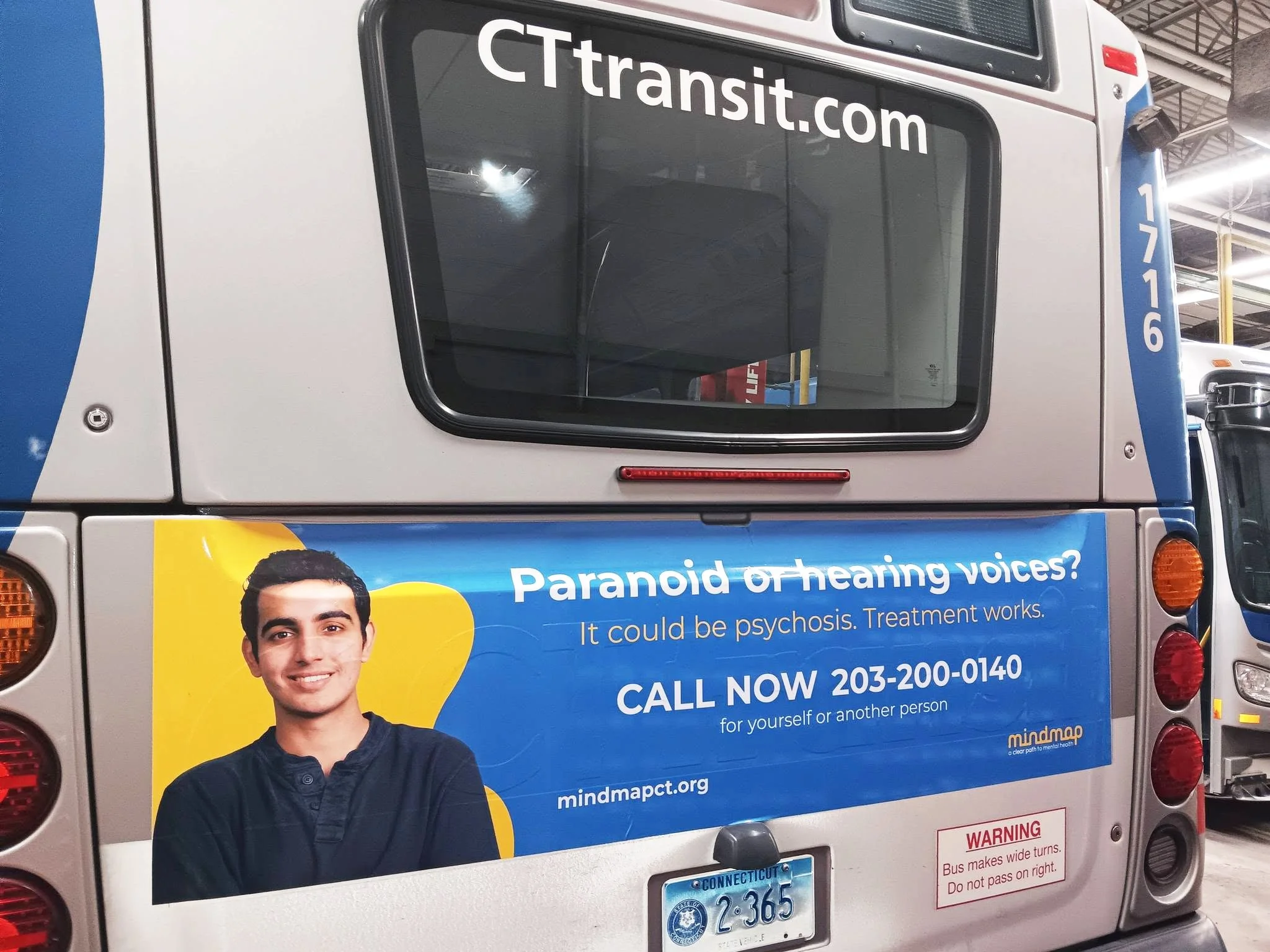
Bus ads ran in the major cities, keeping the campaign visible where foot traffic was highest.
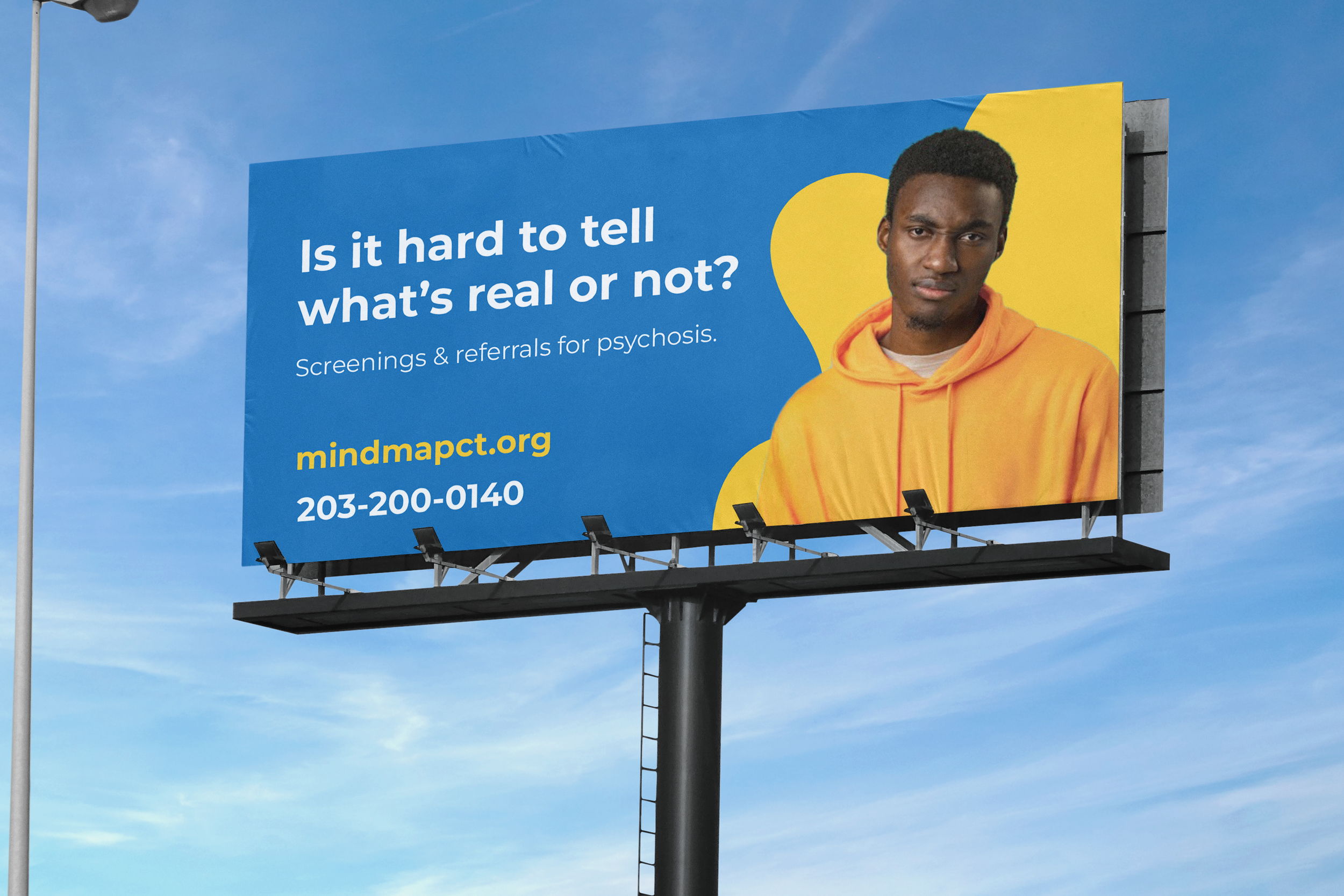
Billboards went up along high-traffic highways across the state, putting the campaign in front of people on their daily commute.
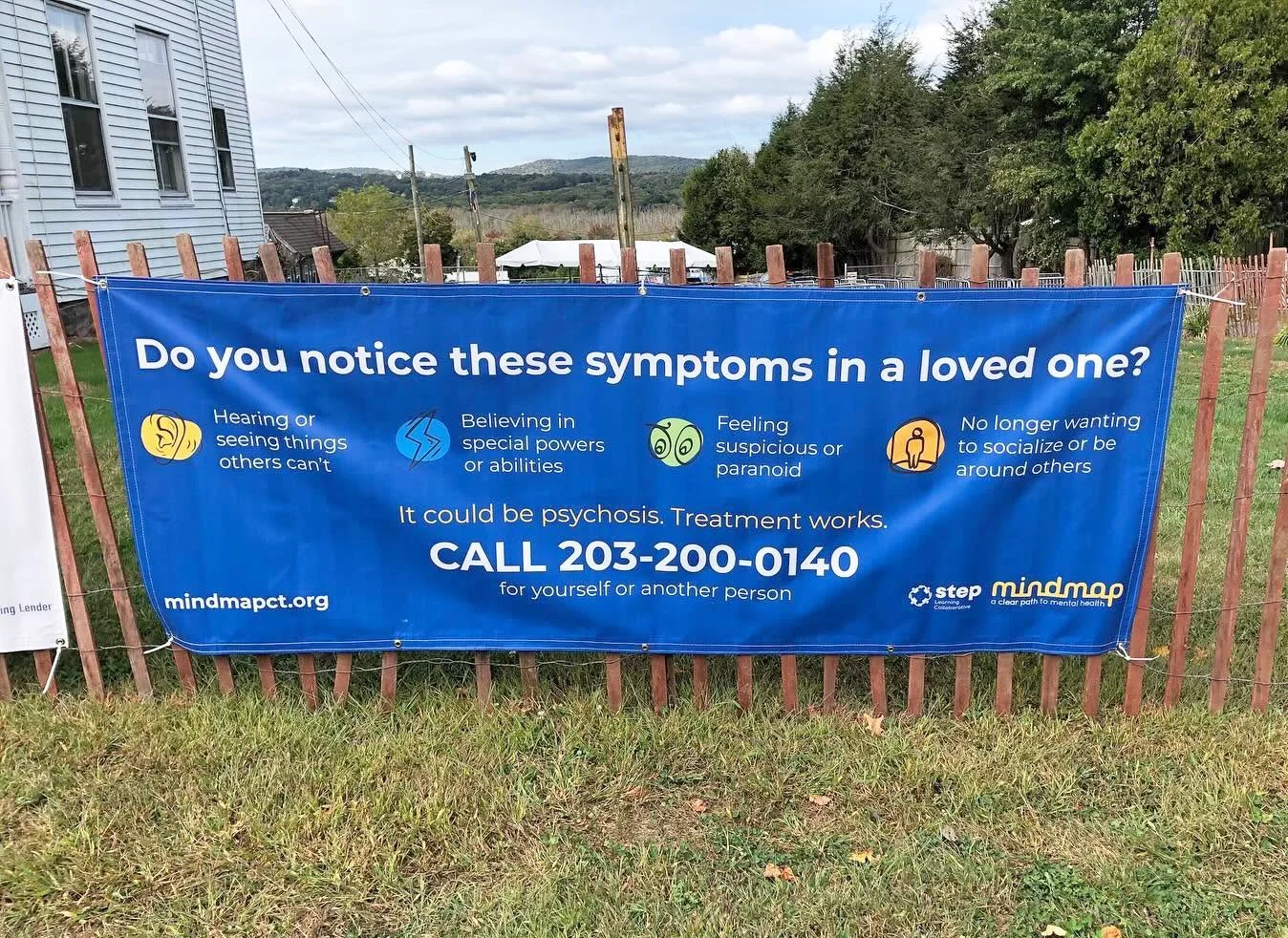
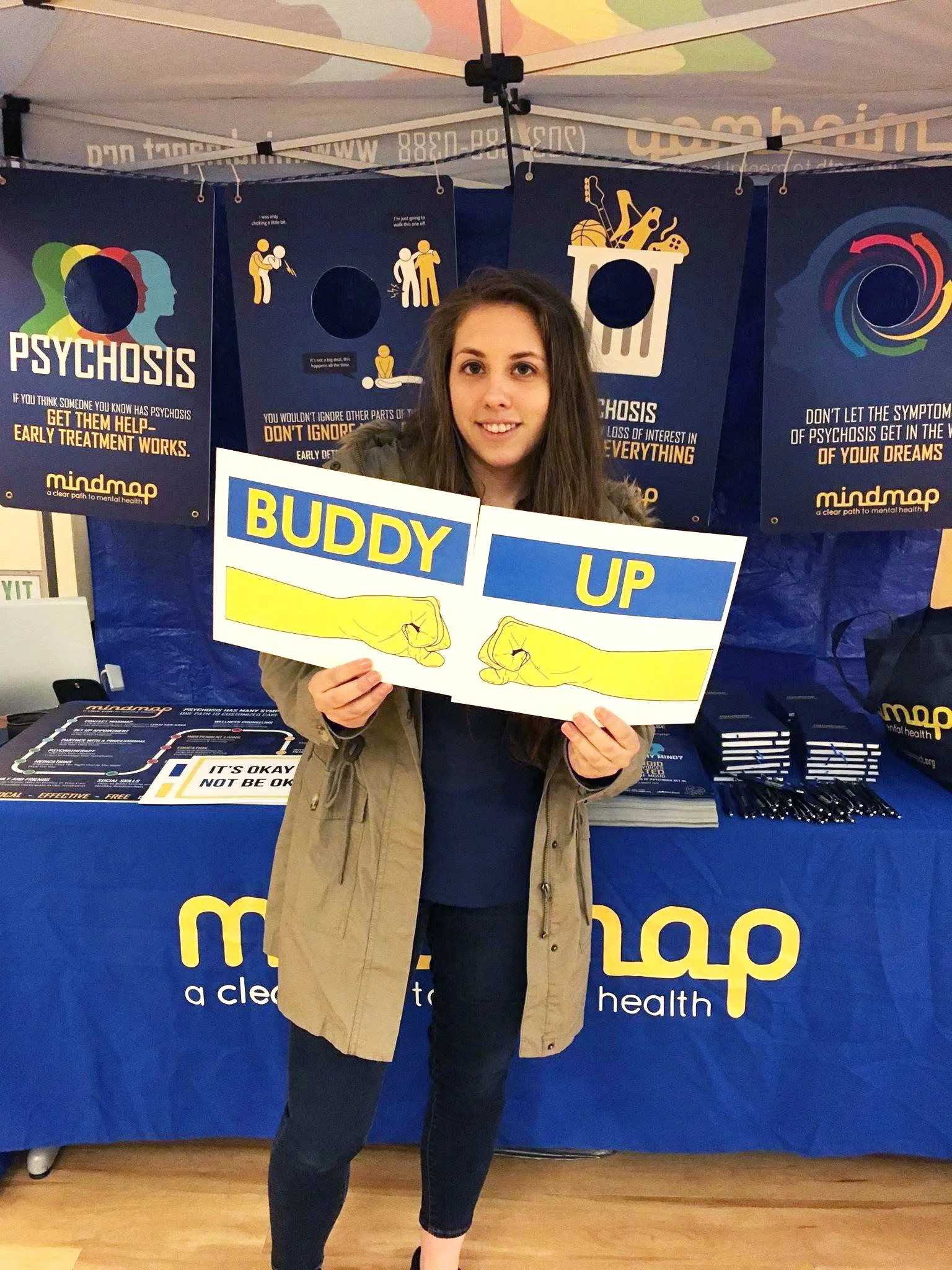
The STEP team took the campaign on the road, setting up booths and sponsored banners at fairs and local events across the state. It was one of the most effective ways to reach communities in more rural areas.
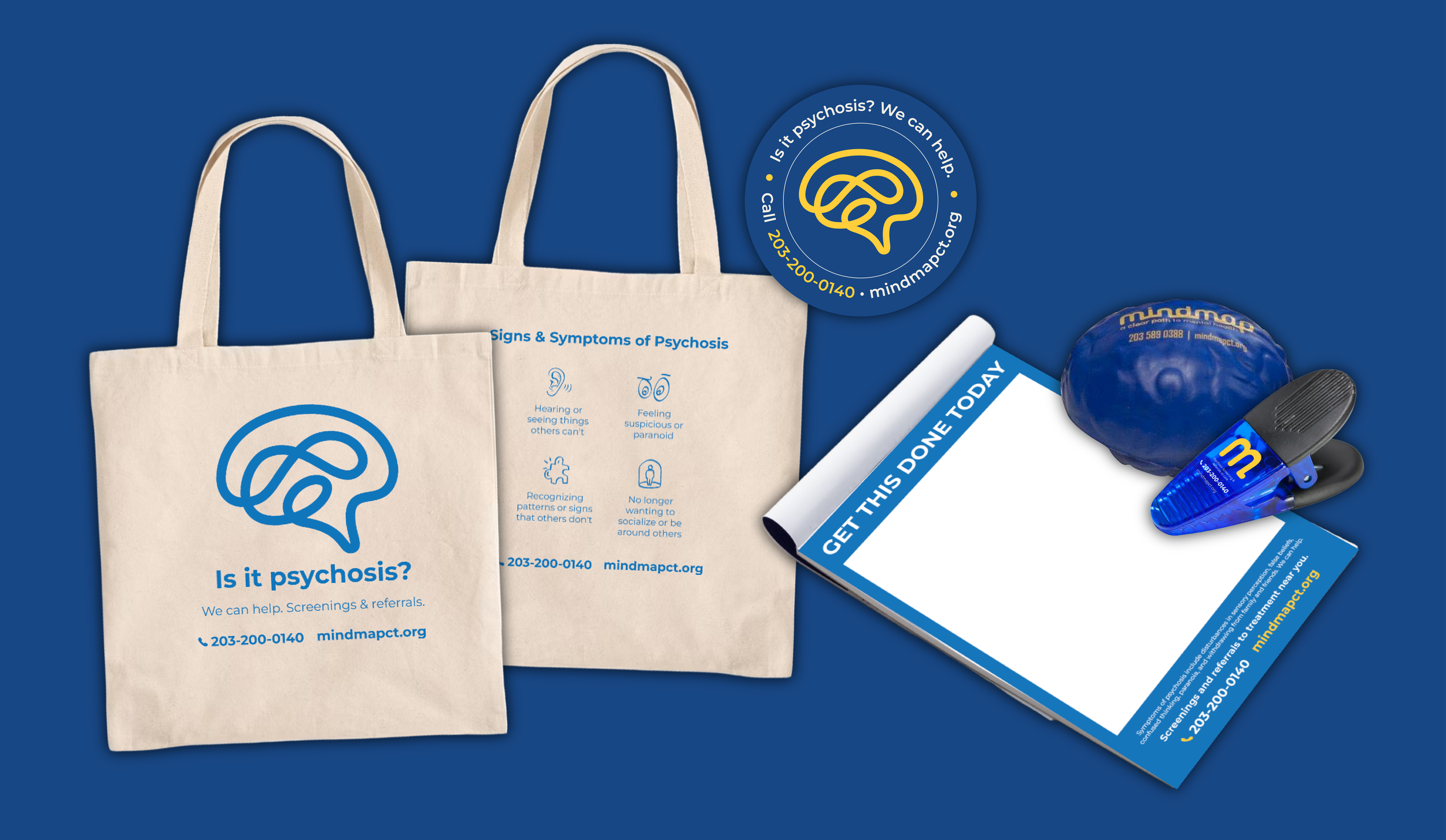
At every event, the team handed out branded merch: t-shirts, tote bags, water bottles, notepads, stickers, and more, keeping Mindmap top of mind long after the event was over.
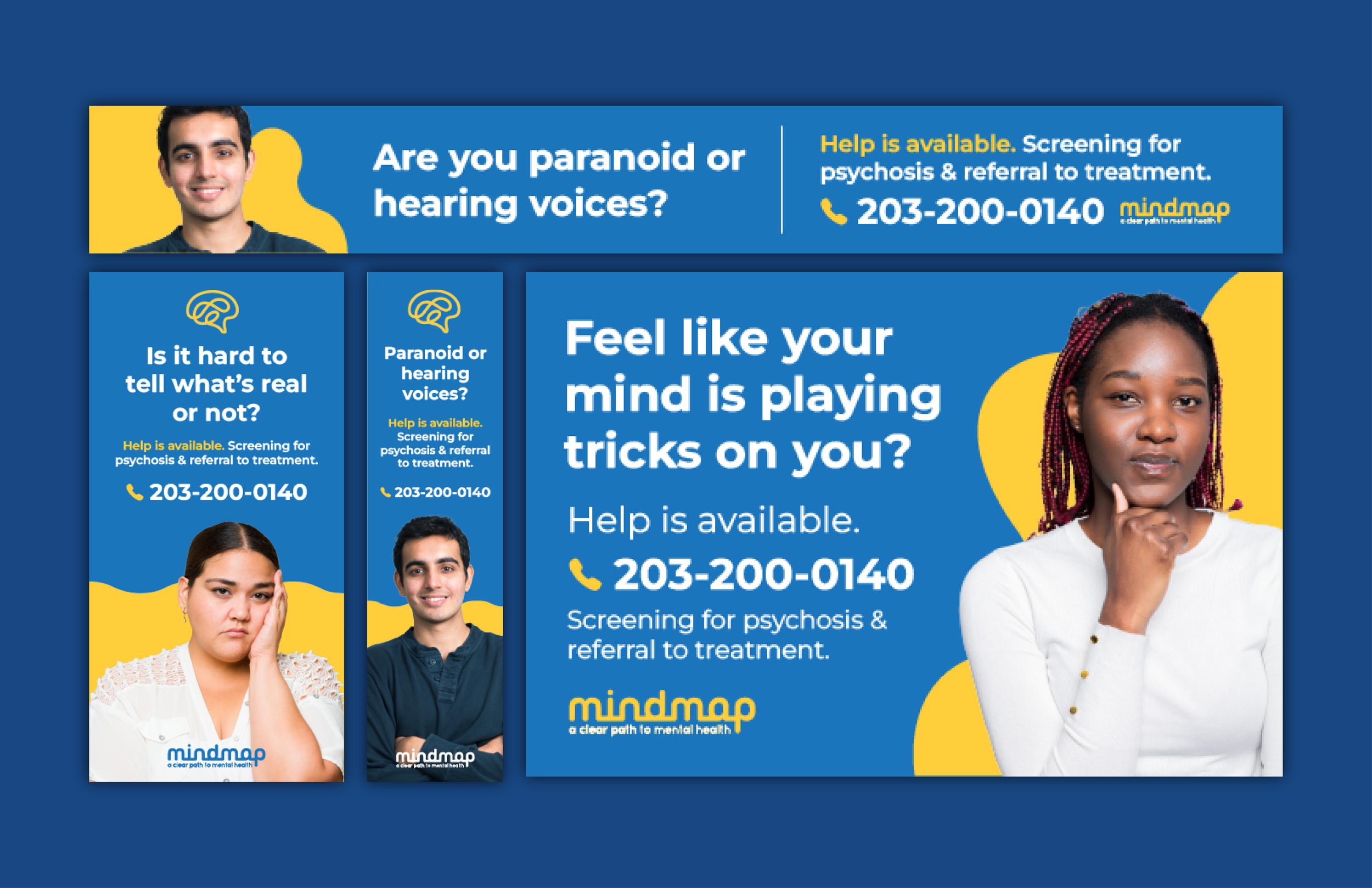
The campaign went digital too. I didn't manage social for this client, but I designed and formatted a full suite of digital ads to reach a highly targeted audience online.
I first worked with Mindmap to carry the established brand through the campaign's 4 years in the New Haven area. Its success secured statewide funding. By then, I was Creative Director and made the call to give the brand a visual upgrade for its next phase.
I started with the website. 10+ pages including a digital toolkit, symptom-check quiz, and lived experiences page. The goal: getting people to pick up the phone and make a referral.
The about page told the story of what four years in Greater New Haven had proven and what it meant to be taking that work across the state.
The about psychosis page broke down the risk factors, signs, and symptoms in plain language, with real-life examples that pushed back against how psychosis is typically portrayed in media. From there, visitors could take the symptom-check quiz to figure out if reaching out was the right next step.
This page laid out the pathways to care, which often starts with a family member or someone else in their corner rather than the individual themselves. It also addresses the obstacles that keep many people from getting help.
The Mindmap Network page let people search the state to find the Early Detection & Assessment Coordinator assigned to their region and the closest Local Mental Health Authority in the network. Putting a name and a face to who would be on the other end of that call was intentional.
Over the course of the campaign we produced countless flyers and handouts, distributed at events, posted across college campuses and hospitals, and included in the digital toolkit for anyone to download and use themselves.
These door hangers went to the Local Mental Health Authorities providing care across the state. Having the Mindmap brand visible inside treatment spaces was intentional, so that by the time someone walked through the door, the place already felt familiar.
Postcards went out to areas where the campaign needed more reach.
Bus ads ran in the major cities, keeping the campaign visible where foot traffic was highest.
Billboards went up along high-traffic highways across the state, putting the campaign in front of people on their daily commute.
The STEP team took the campaign on the road, setting up booths and sponsored banners at fairs and local events across the state. It was one of the most effective ways to reach communities in more rural areas.
At every event, the team handed out branded merch: t-shirts, tote bags, water bottles, notepads, stickers, and more, keeping Mindmap top of mind long after the event was over.
The campaign went digital too. I didn't manage social for this client, but I designed and formatted a full suite of digital ads to reach a highly targeted audience online.
Lived Experience Video Series
I edited a series of lived experience interviews featuring individuals sharing their own stories of symptoms, getting help, and navigating stigma. The challenge was shaping each story into something clear and compelling without losing the person behind it.
One of the featured voices was Cecelia McGough, a well-known advocate and nonprofit founder in the psychosis space. We also interviewed providers to show the genuine care behind the work, making the idea of reaching out feel a little less intimidating.
I also edited all provider and community training sessions for public viewing online.
Impact
After four years of the campaign in the New Haven area, research showed about a 65% decrease in the duration of untreated psychosis (430 days to 149 days)—helping individuals enter treatment sooner. The clinic went from an average of 30 inquiry calls a year to 263. This success allowed the STEP Learning Collaborative to secure funding to expand Mindmap statewide. Due to cuts in government funding, the statewide effort was discontinued before results could be fully measured, thought a research article that I helped co-author is currently under review for what we were able to accomplish in the first year. The initial findings demonstrate the impact of strategic, stigma-reducing public health communication and paved the way for the CALM campaign in New Orleans (which I also had a part in).
Awards & Press
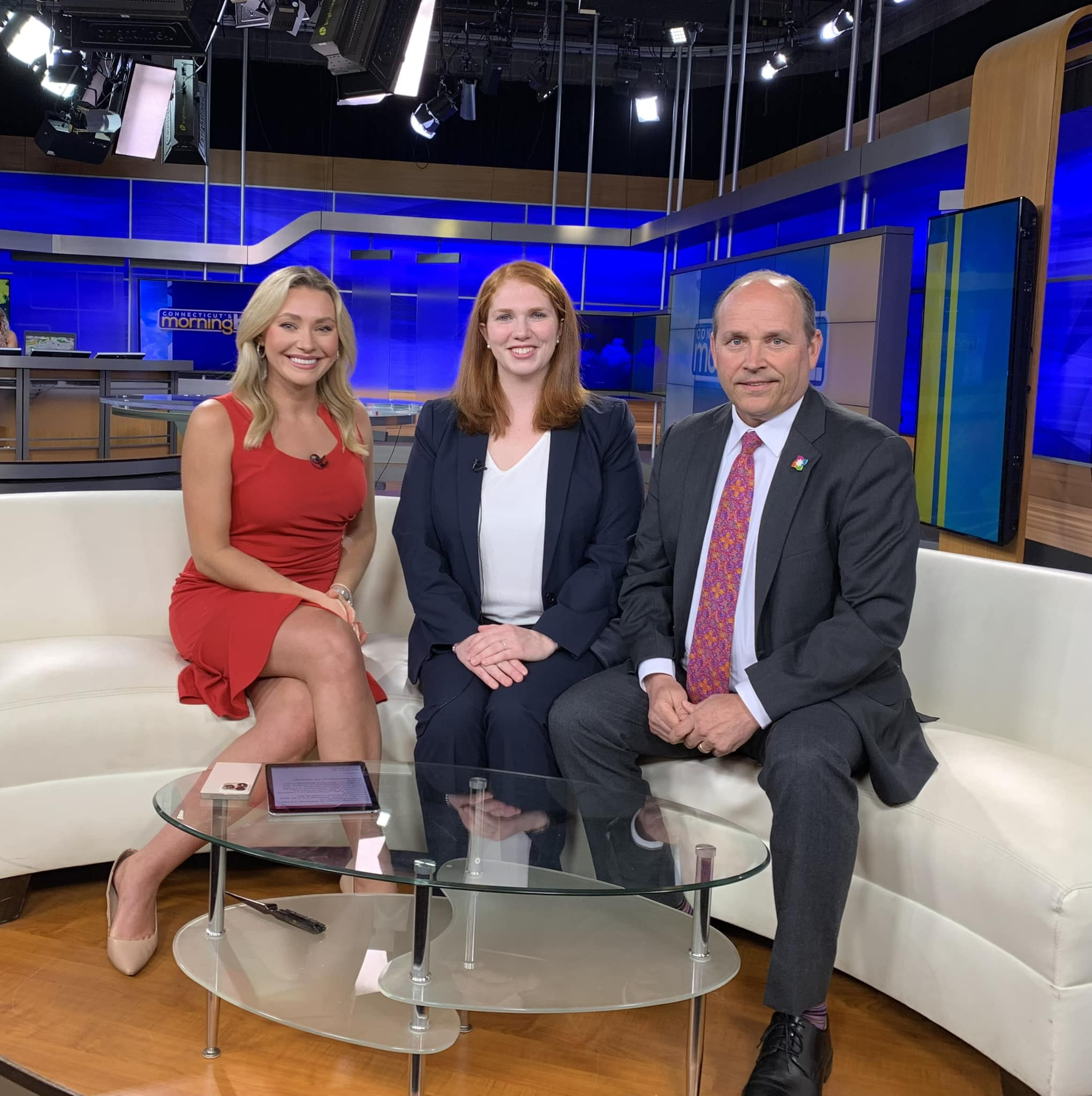
New Haven Register 2017: Mindmap Takes a New Approach to Mental Health
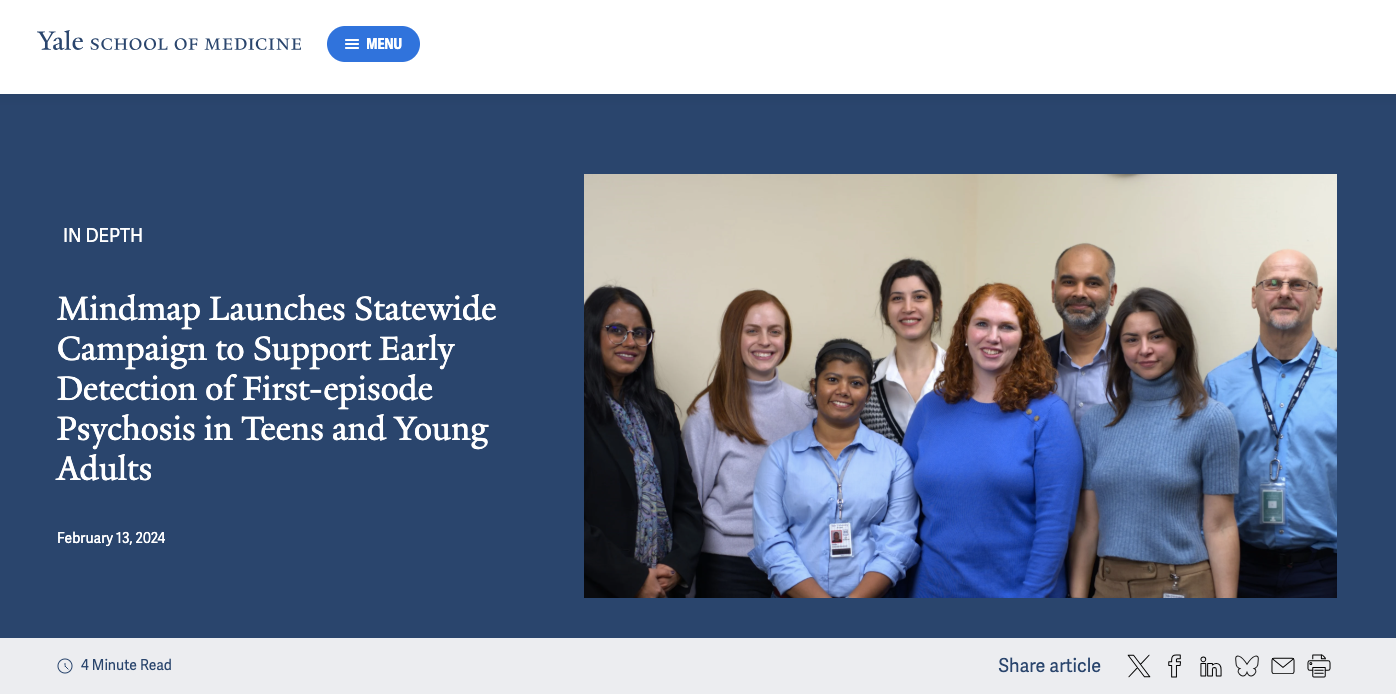
Yale School of Medicine 2024: Mindmap Launches Statewide Campaign to Support Early Detection of First-episode Psychosis in Teens and Young Adults
Research
NIH 2020: Reducing the Duration of Untreated Psychosis in a U.S. Catchment: The Mindmap Campaign
NIH 2022: Reducing the Duration of Untreated Psychosis (DUP) in a US Community: A Quasi-Experimental Trial
Coming Soon! A research article I co-authored on is currently under review!